
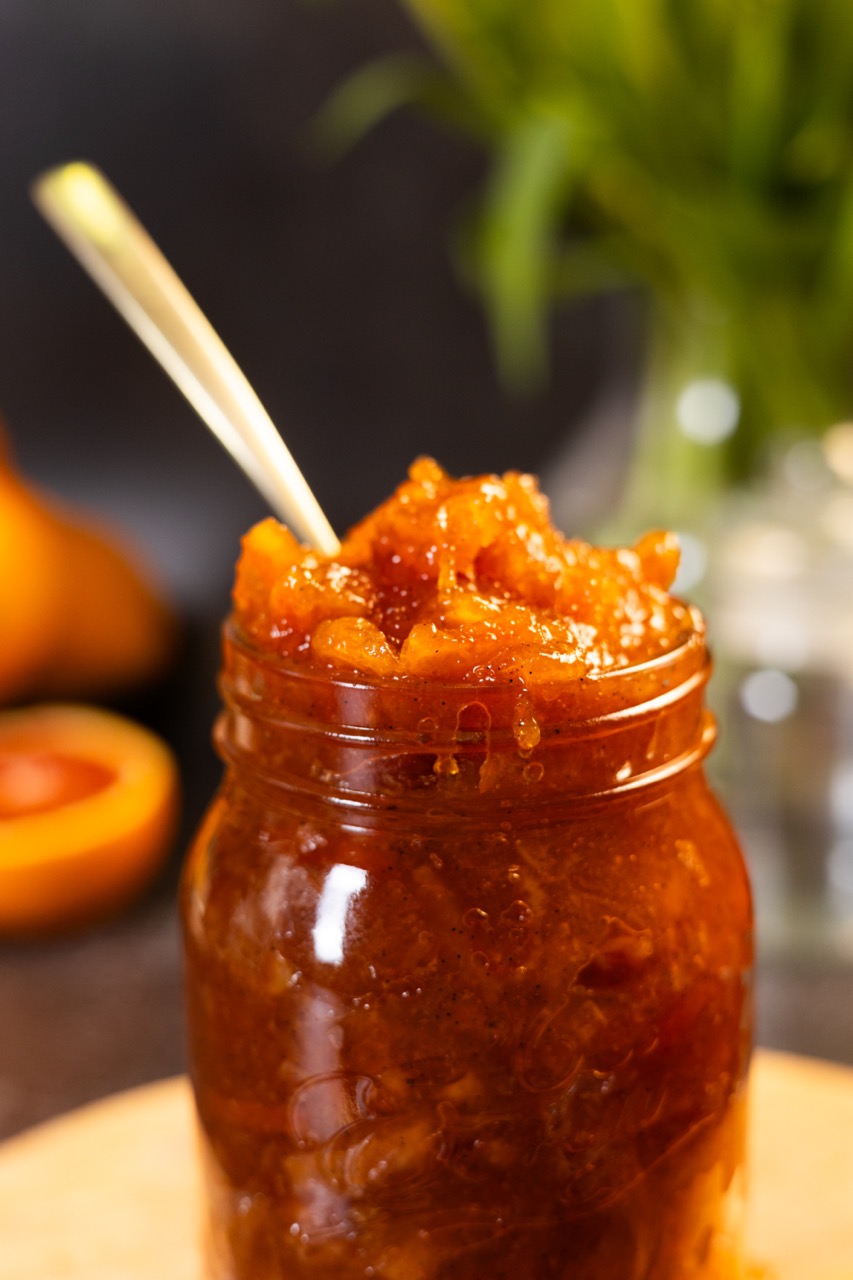
A delicious marmalade that can be eaten with cheeses and crusty bread.
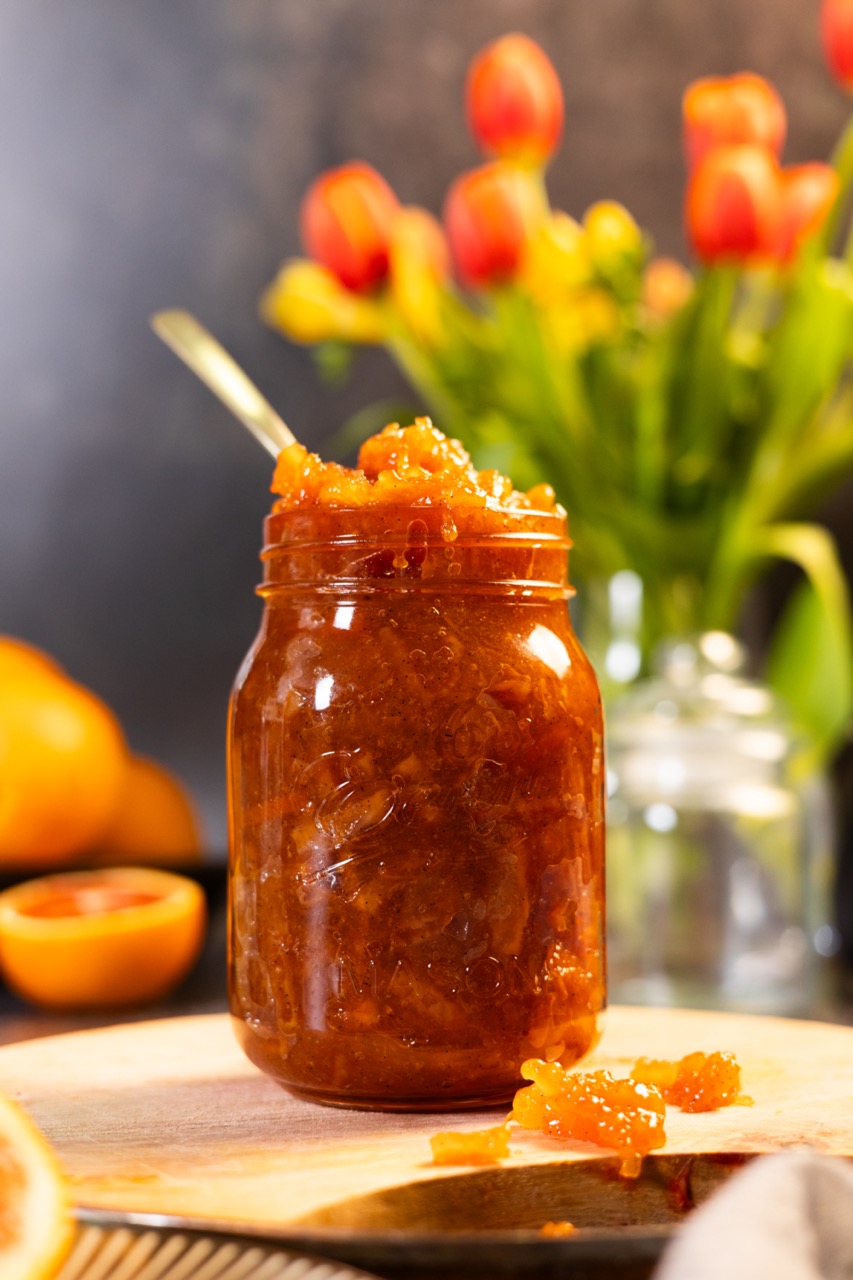
The honest truth was that jam and marmalade-making was not something I grew up with.
My mother was very skilled at making savoury pickles, like lime, lemon, mango and kumquat. She didn’t dabble much with jams though … good old apricot jam was as good as it got – that too from the store! It’s only after I began travelling in Cape Town and surrounds, stopping at farmstalls, did I realize the universe of preserves extended far beyond strawberry and apricot!
Whilst spreading home-made jam on bread is a favourite pastime of mine, I equally like using them in many of the recipes I create – like my Hungarian Tart.
Marmalades have a slightly bitter edge, which I think makes it a bit more polarizing than a sweet jam – but you rarely eat it by itself. With the right pairing, the bitterness is a wonderful accompaniment to other flavours. For example, a creamy, salty whipped feta would benefit from a sharper, more bitter partner. So before you write off marmalade as being too bitter, I suggest you give it a try and pair it with something sweet, creamy and maybe even a bit salty.
You know me by now – I love to talk about the science behind food. As it goes, the ratio of marmalades are typically 1 part fruit to 2 parts water to 1 part sugar. Of course, the actual variety and sweetness of the fruit means you can play around with the sugar, so be guided by intuition more than a strict recipe. Blood orange peels are a bit more bitter than conventional oranges, so I’ve upped the sugar a bit.
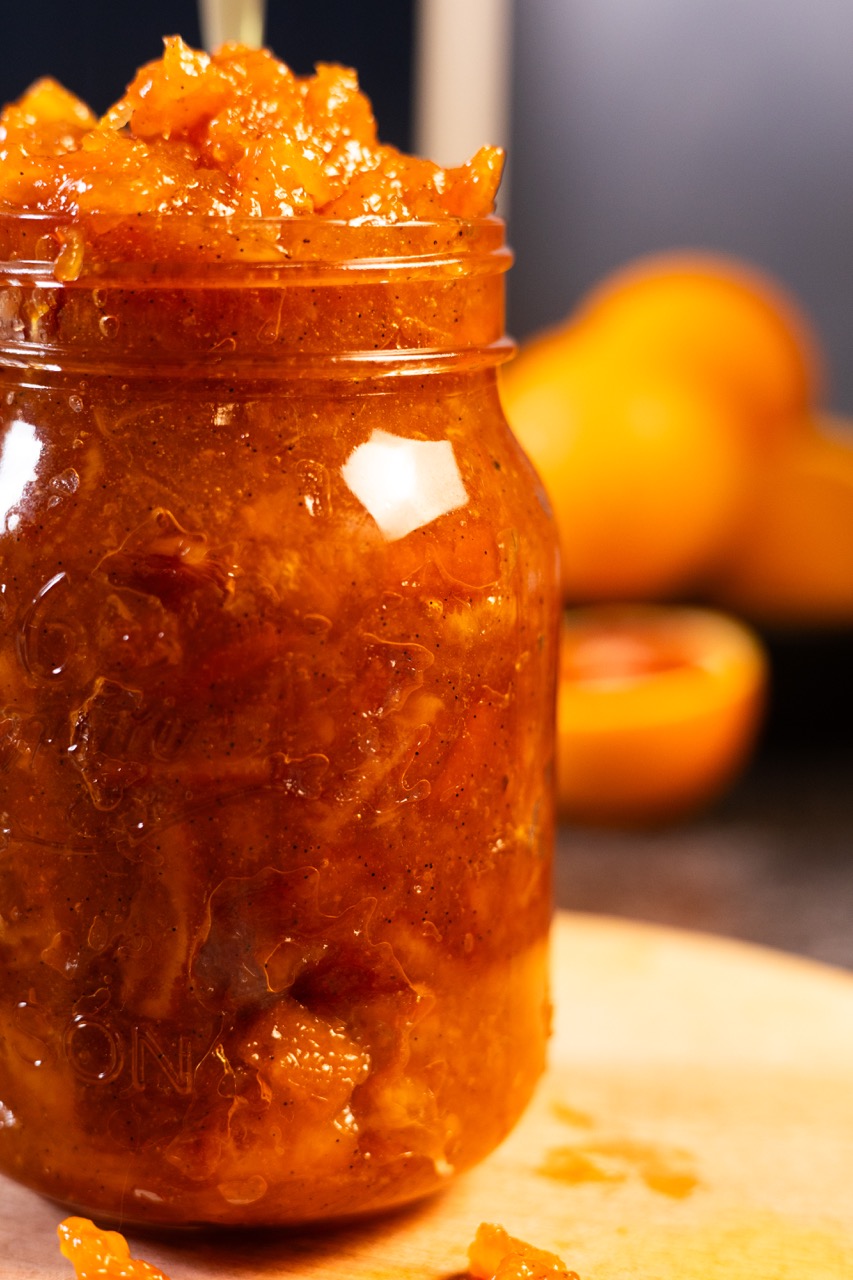
WHAT SHOULD I KNOW ABOUT MAKING THIS?
How do I know when it’s ready?
If you have a candy thermometer, it should register 104 degrees celcius.
How do I know it’s ready if I do not a themometer?
Place a glass plate in the freezer, whilst you make the marmalade. When you think your jam is ready, put a bit on the plate and place it back in the freezer for 5 minutes. When you try and push the jam, it will wrinkle a bit and hold its trail when you run your finger through it.
How long do you boil the peel for?
I boiled the peel for an hour, until the peel has softened and become fairly translucent. Note that unlike Seville oranges which become almost fully translusent, the same will not happen with blood oranges.
My marmalade did not set, why?
It is likely because you have not cooked it long enough, or it is lacking pectin. If it is still liquid after being bottled, I decant it back into the pot, add an extra lemon, and maybe a bit of sugar to taste and bring it back up to a boil. The extra pectin in the lemon will help it set, albeit does change the flavour a bit.
Why is my marmalade now cloudy ?
The main reason I have found, is because you have brought it up to a rapid boil too quickly after you have added the sugar. It’s important to dissolve the sugar into the liquid gently for about 10 minutes and then gently bring it up to a rapid boil.
Research also suggests it’s because of additional pectin from the seeds which has leeched into the Jam, but there are no seeds used in this one, so this would not be the reason for the marmalade becoming cloudy.
How do I store this marmalade?
As this is a relatively small batch, you don’t need to concern yourself with preservation techniques unless you are planning to eat this over longer than a month.
If you want to preserve these, you need to ensure your glass jars are well sterilized and baking paper round, dipped in brandy, is placed over the top of the marmalade.
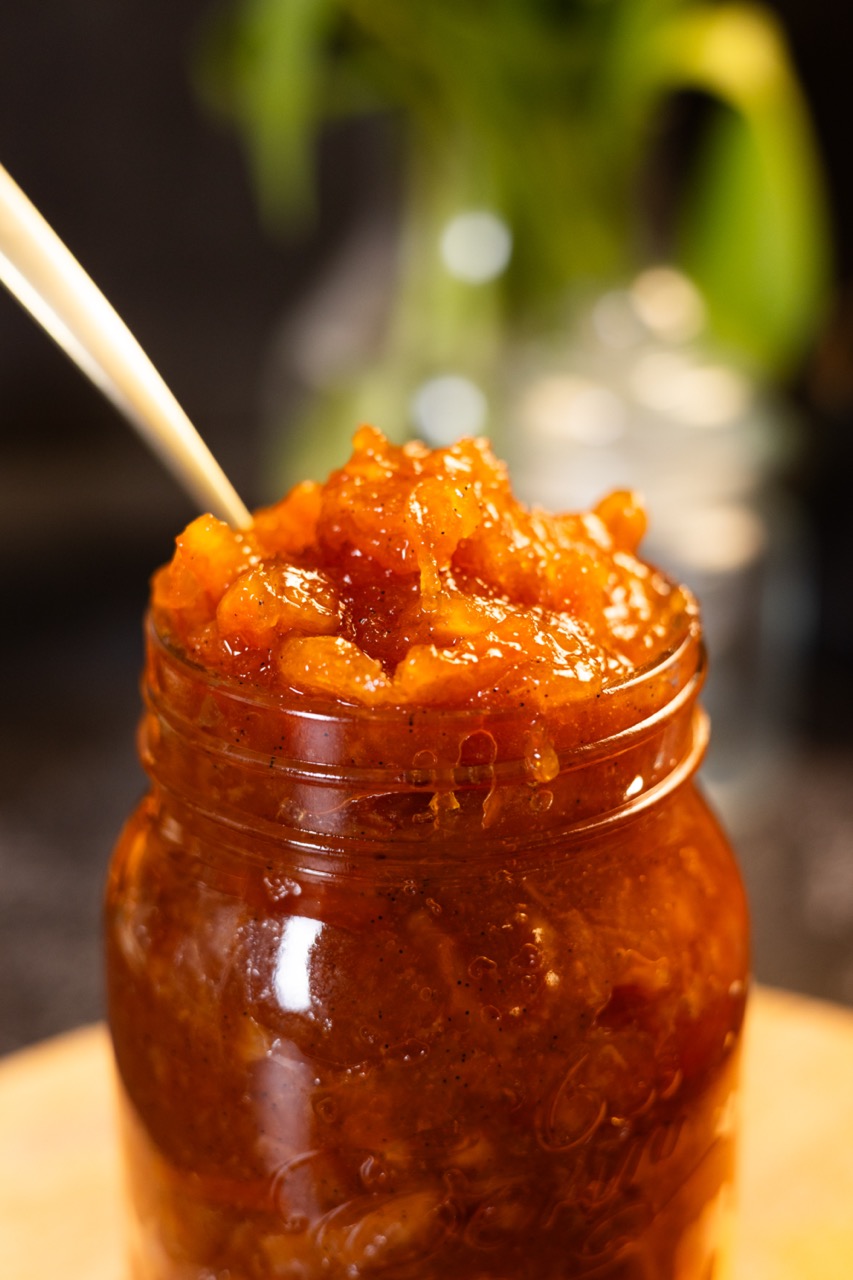
OTHER BLOOD ORANGE RECIPES
If you like this blood orange recipe and enjoy the blood orange season, here are some other recipes:
- Blood Orange and Almond Tea Cakes
- Blood Orange Upside Down Cake
- Blood Orange Jelly and Vanilla Yogurt Panna Cotta
- Blood Orange Cream Cheese Pound Cake
- Blood Orange, Almond and Polenta Cake
If you make this recipe, please share it with me by tagging me on Instagram @adventureswithsugar or on Facebook at Adventures with Sugar.
Pro Tip: Please read the recipe fully from start to finish, before you begin.
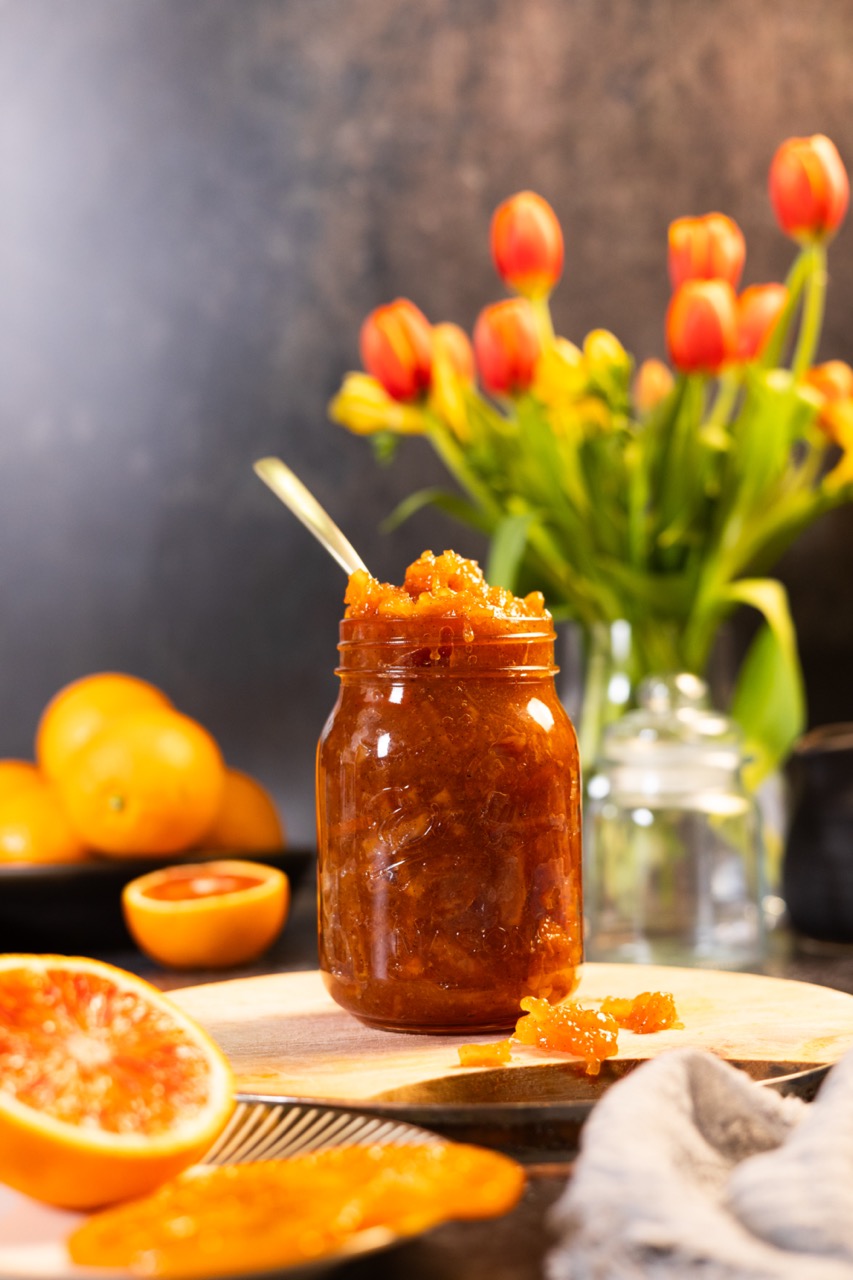
FOR THE BLOOD ORANGE AND BRANDY MARMALADE
- 2 blood oranges
- 1 navel orange
- 1 lemon
- 1,6 liters of water
- 1 kg sugar
- 1/4 cup brandy (optional)
METHOD
- Freeze your plate: Before you begin, place a glass plate in the freezer to do the setting test as described in the FAQ above.
- Prepare your fruit: The total weight of the fruit should be 800g. Prep your fruit by washing them thoroughly and cutting off the stub of the oranges and lemon. Cut the fruit in half, around the width.
- Juice and cut your fruit: Juice the blood oranges, orange juice and lemon juice together. Then cut each half of the peel into quarters. So you will have a total of 8 pieces per orange/lemon. Take one of the quarters and cut along the breadth to get two pieces – it will look a bit like a triangle. Then finely slice the peel into very thin lengths – around 1 – 2 mm.
- Boil the peel: Place the fruit juice in a medium size pot (26cm le crueset is what I use as reference), followed by the water and all the peels. Bring to a boil and continue to boil for about an hour. The peel should go translucent and soften, if you feel it. The water would have reduced by about 25%. This will take about 50min to an hour.
- Add in the sugar: Once the peel has softened and the water has reduced, turn down the heat. Add in all the sugar and dissolve for 10 minutes, before gently bringing up to a boil. Continue to boil for around 30 – 45 minutes until the jam reaches 104 degrees celcius or the jam dropped onto a cold plate holds it shape. See FAQ above.
- Add in the brandy: This step is optional, but it’s nice to stir through the brandy at the end. You can use as much or little as you want.
- Bottle and store: Allow the marmalade to cool for 5 minutes, before bottling. See FAQ above.
Recipe by adventureswithsugar.com

No Comments